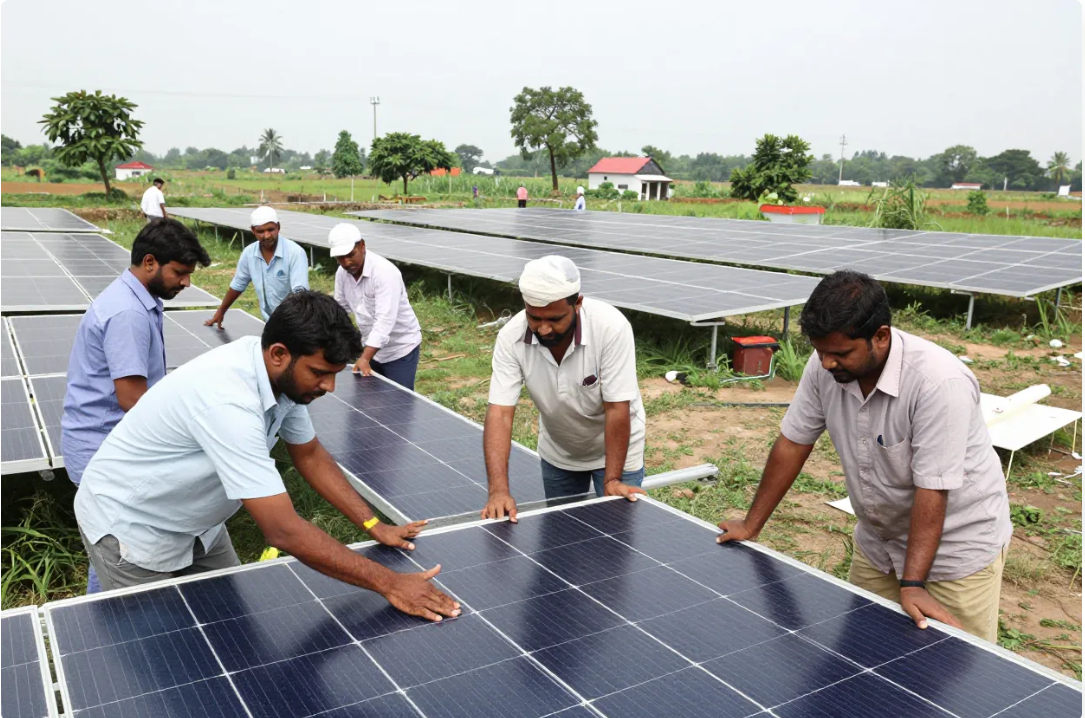
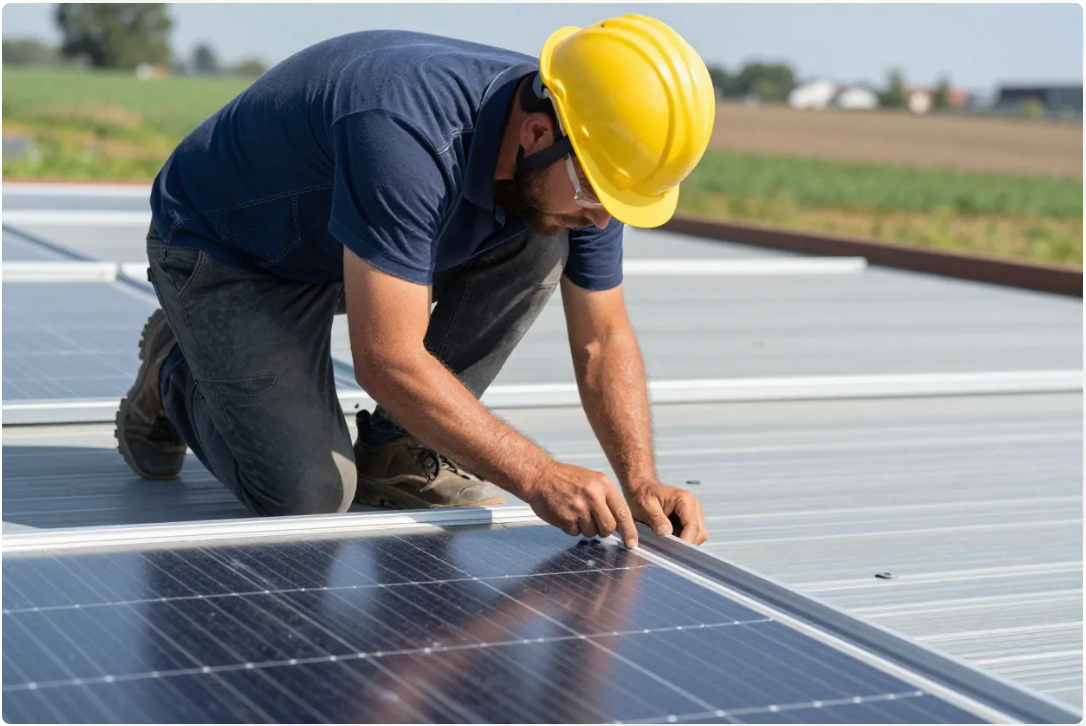
At the forefront of the profound transformation of the global energy structure, a seemingly inconspicuous yet crucial industrial link—photovoltaic aluminum frames—is accelerating into a fast track of development at an unprecedented pace. Authoritative forecasts indicate that by 2025, the global market demand for photovoltaic aluminum frames will soar to 5.5 million tons. This astonishing figure is not merely a simple market projection, but a resounding testament to the green energy revolution moving from grand narratives to concrete practices under the global consensus on carbon neutrality. It signifies the opening of a multi-billion dollar market driven by technological innovation, policy support, and market demand, with aluminum frames serving as the indispensable "golden framework" of this burgeoning industry.
The explosive growth in demand for photovoltaic aluminum frames is not without foundation; it is driven by a combination of three factors: global energy transition, China's strategic leadership, and technological iteration and upgrading.
Firstly, the "hard core" demand of the global energy transition is the fundamental driving force. With the deepening implementation of the Paris Agreement targets, countries around the world have elevated renewable energy to a national strategic level. Photovoltaic power generation, with its rapidly decreasing costs and high technological maturity, has become the main force in global energy growth. From Europe's "REPowerEU" plan to the US Inflation Reduction Act, and the energy access needs of developing countries, global photovoltaic installed capacity continues to climb. Every photovoltaic module requires the protection and support of a frame, providing the most solid and broadest growth foundation for the aluminum frame market.
Secondly, the "engine" driving force of China's "dual carbon" goals is crucial. As the world's largest photovoltaic manufacturing country and application market, China has clearly set the goals of achieving carbon peaking before 2030 and carbon neutrality before 2060. Under this guidance, policies such as the construction of large-scale wind and solar power bases and the "county-wide promotion" of distributed photovoltaics have emerged rapidly. The vitality of China's photovoltaic industry's "internal circulation" has been fully unleashed, with component production ranking first in the world for many consecutive years. This "Chinese speed" is directly transmitted to the upstream of the industrial chain, resulting in Chinese companies, which hold an absolute dominant position in the global supply of photovoltaic aluminum frames, having full order books and rapid capacity expansion, becoming the core engine of global market growth.
Furthermore, the "double wings" of technological iteration and cost advantages have made the position of aluminum frames increasingly secure. Currently, photovoltaic cell technology is accelerating its transformation from P-type to N-type, and N-type cells place higher demands on packaging processes and material performance. Aluminum alloy, with its lightweight, high strength, corrosion resistance, easy formability, and excellent electrical and thermal conductivity, remains the most ideal frame material for the present and for a considerable period in the future. Meanwhile, with the improvement of recycled aluminum utilization technology and cost optimization brought about by large-scale production, the cost-effectiveness advantage of aluminum frames is becoming increasingly prominent, playing an irreplaceable role in ensuring the stable operation of solar modules for 25 years or even longer.
The 5.5 million-ton market size represents both an unprecedented historical opportunity for the industry and a severe test of the comprehensive strength of the entire industrial chain, a true "double-edged sword" of opportunities and challenges.
From the perspective of opportunities, this is undoubtedly a "golden track" for the industrial chain. For aluminum profile manufacturers, frame processing companies, and even upstream electrolytic aluminum suppliers, this means huge market space and profit prospects. It will foster a group of globally competitive "specialized, refined, and innovative" enterprises, driving the entire industrial chain towards intelligence, green development, and high-end manufacturing. This aligns with the current development requirements of "new quality productive forces," which aim to achieve high-quality industrial development through technological innovation and management optimization. Companies are increasing R&D investment, introducing automated production lines, and improving production efficiency, striving to gain a larger share of this lucrative market.
However, challenges are also ever-present. The first and foremost is the "stress test" on the supply chain. The 5.5 million-ton volume places extremely high demands on the stability and price volatility of upstream electrolytic aluminum supply. As a commodity, the cyclical fluctuations of aluminum prices will directly impact the profit margins of frame manufacturers. Secondly, energy consumption and environmental protection issues are becoming increasingly prominent. Electrolytic aluminum is a typical high-energy-consuming industry. Under the "dual carbon" goals, how to use "green aluminum" (i.e., aluminum produced through renewable energy) to manufacture photovoltaic frames and achieve a closed loop of "manufacturing green energy equipment with green energy" has become a crucial issue that the industry must address. Furthermore, with the rise of global trade protectionism, some countries and regions may impose barriers on Chinese photovoltaic products, bringing uncertainty to Chinese frame manufacturers that rely on exports.
III. The Path to Breakthrough: Embracing Innovation and Sustainability
Faced with both opportunities and challenges, the photovoltaic aluminum frame industry must seek breakthroughs in the dimensions of "innovation" and "sustainability" to achieve stable and long-term growth.
Moving towards "innovation" means continuous technological advancement. This is not limited to optimizing existing aluminum alloy formulations and developing lighter, stronger, and more weather-resistant new alloy materials, but also includes exploring the impact and integration of new packaging technologies such as frameless and double-glass modules on the traditional frame market. Simultaneously, intelligent and digital transformation of the production process is crucial for improving efficiency and reducing costs. Implementing lean management throughout the entire process, from order to delivery, through industrial internet and big data analysis, is essential for building core competitiveness.
Embracing "sustainability" represents a commitment to a sustainable future. The application of "green aluminum" will be the next focus of industry competition. Companies that proactively establish or secure a "green aluminum" supply chain will not only effectively reduce their carbon footprint and meet international market requirements for low-carbon products, but also gain significant advantages in brand value and market bargaining power. This is both a manifestation of corporate social responsibility and a strategic investment for the future. Furthermore, increasing the proportion of recycled aluminum used in photovoltaic frames is also an effective way to achieve a circular economy and reduce resource consumption.
Sailing "out to sea" is an inevitable choice for Chinese companies. Leveraging their strong manufacturing capabilities and cost advantages, Chinese photovoltaic aluminum frame companies should actively "go global," establishing production bases in Southeast Asia, the Middle East, and even Europe and the United States, closer to end markets. This will not only effectively avoid potential trade barriers but also better serve global customers and build a safer and more resilient global supply chain system.
5.5 million tons in 2025 – this is not just a number, but a landmark of an era. It signifies that the photovoltaic aluminum frame industry is standing at a historical turning point, carrying the high hopes of global energy transformation. In this magnificent green journey, only those companies that embrace innovation, adopt green transformation, and possess a global perspective can ride the waves, transform challenges into opportunities, and ultimately forge their own brilliance on this trillion-dollar "bright track." The "golden age" of photovoltaic aluminum frames has arrived.
The company primarily engages in the research and development, manufacturing, and application of solar frame products, automated frame production lines, and green energy structural materials.

 English
  繁體中文
繁體中文  العربية
  Français
  Русский
  Español
  Português
  Deutsch
  italiano
  日本語
日本語  한국어
한국어  Nederlands
  Tiếng Việt
  ไทย
ไทย  Polski
  Türkçe
  አማርኛ
አማርኛ  Bahasa Melayu
  தமிழ்
தமிழ்  Filipino
  Bahasa Indonesia
  magyar
  Română
  Čeština
  қазақ
қазақ  Српски
  हिन्दी
  فارسی
فارسی  Slovenčina
  Slovenščina
  Svenska
  українська
  Ελληνικά
  Suomi
Suomi  עברית
עברית  Latine
  اردو
اردو  Shqip
Shqip  বাংলা
বাংলা  Hrvatski
  Afrikaans
  Gaeilge
  සිංහල
සිංහල  Oʻzbekcha
  অসমীয়া
  Български
  Esperanto
  guarani
  Kurdî
Kurdî  Cymraeg
  isiZulu